

You can’t forget the thrill of Onyxia Wipe Animation, where strategy met chaos, or the audacious Leeroy Jenkins charge, emblematic of unpredictable teamwork. Remember C’Thun’s notorious unkillable phase? It forced countless clever adaptations. The world’s first Kel’Thuzad kill showcased impeccable synchronization, while the fierce race for Illidan in Sunwell Plateau highlighted top guild competitiveness. M’uru’s brutal phase-switching mechanics tested every raider’s mettle, and Yogg-Saron’s Brain Room demanded quick-thinking under pressure. The iconic Lich King fall tied deep narrative threads together, whereas defeating Mythic Archimonde set a new standard for coordination. Keep exploring to uncover more epic tales and triumphs.
Key Takeaways
- Leeroy Jenkins Charge: An iconic moment of spontaneous bravery that became a viral sensation.
- C’Thun’s Unkillable Phase: A notorious bug that challenged players and led to community outcry and eventual hotfixes.
- World First Kel’Thuzad: Marked a historic achievement requiring flawless team synchronization and advanced strategies.
- Lich King’s Fall: A narrative-rich battle concluding a major storyline, requiring precise mechanics execution.
- Mythic Archimonde Kill: Tested peak coordination and strategic mastery, epitomizing raid difficulty in WoW.
Onyxia Wipe Animation
Remember that time the WoW community was collectively floored by the Onyxia Wipe Animation? It wasn’t just a raid wipe; it was an encapsulation of everything that makes raiding in WoW thrilling and vexing. Onyxia’s lore and dragon mechanics laid a heavy burden on even the most seasoned players, transforming the raid atmosphere into a jittery yet exhilarated environment. You’d face a boss design that required precise encounter strategy. If your guild dynamics were off, you could forget about downing her. Player confidence and team communication were paramount.
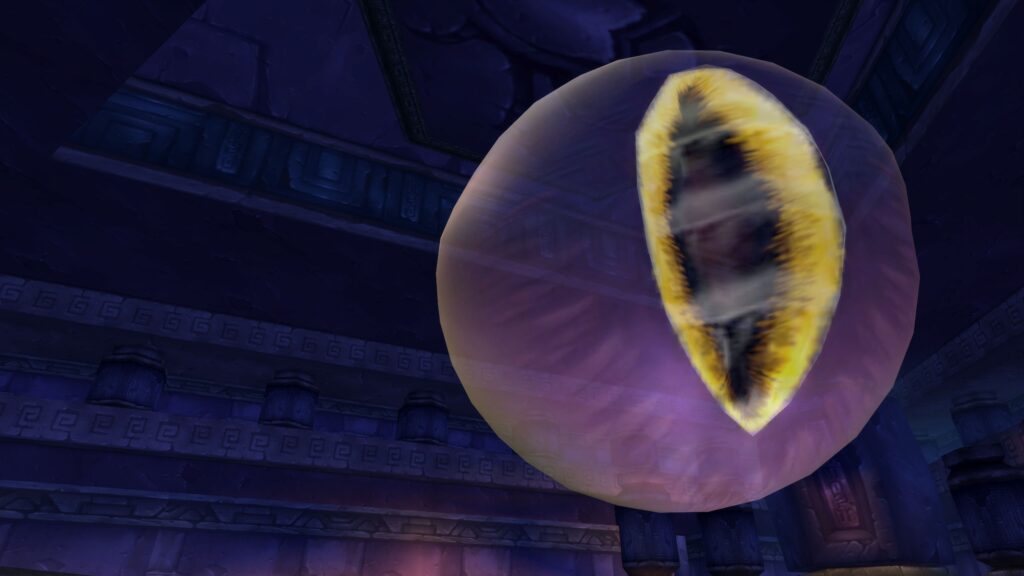
Watching the Onyxia Wipe Animation, you could almost feel the weight of the players’ desperation as they tackled the elaborate mechanics of phase changes and enormous flame breaths. Everyone has that rogue who insists on going full DPS instead of managing the whelp adds, right? The cinematic elements of the video captured the essence of frustration and relentless retrying. The guild’s struggle emphasized the importance of perfecting every small detail, from positioning to cooldown management. So, the next time you raid, think back to Onyxia. It’s more than a battle; it’s a test of your team’s unity and strategic prowess.
Leeroy Jenkins Charge
You’ve probably seen or heard of the infamous Leeroy Jenkins Charge, where an unexpected hero emerged from the chaos to become a viral gamer phenomenon. This spontaneous charge wasn’t just a mere game blunder; it highlighted the unpredictable and often hilarious nature of online teamwork. Analyzing this moment, you can see how a single player’s bold move turned into an enduring legend, forever etched in WoW history.
Unexpected Hero Emerges
Few moments in World of Warcraft’s vast history have become as iconic as Leeroy Jenkins‘ charge into the Rookery of Upper Blackrock Spire. It wasn’t just about one player’s audacity; the spectacle illustrated a blend of heroic sacrifices and unexpected comebacks. When Leeroy screamed his battle cry and dashed into danger, the team was forced to adapt in the blink of an eye.
Despite chaotic circumstances, courage under pressure emerged as players scrambled to devise last-minute strategies. Some members performed daring maneuvers to cover for Leeroy’s unplanned execution of their initial plan. While the team was initially shocked, spontaneous teamwork kicked in as they struggled to handle the onslaught.
Heroic sacrifices became evident when characters fell, protecting each other against overwhelming odds. These moments of bravery underscored the significance of such high-stakes encounters. Even with the plan in shambles, the group’s effort exemplified the essence of surprise victories. Their actions transformed disaster into a legendary tale of camaraderie and resilience.
Although unplanned, this raid perfectly captured the spirit of World of Warcraft, where the unpredictable often reveals heroes in the most unlikely ways.
Viral Gamer Phenomenon
When Leeroy Jenkins screamed his infamous battle cry and charged headlong into the Rookery, he did more than just disrupt a meticulously laid plan. You witnessed a moment that transcended gaming screens, becoming an iconic symbol in streaming culture. In that brief, chaotic span, the dynamics of your guild were shaken as players scrambled to recover from an unexpected disaster.
Gaming communities erupted, dissecting every aspect of that charge and its disastrous aftermath. Content creators and streamers turned it into a viral challenge, pushing raid strategies to the forefront of discussions. Could your raid progression survive such unplanned chaos? Discussions in player interactions now included sympathies for disastrous moments and the essential importance of teamwork and preparation.
Esports scenes have even taken cues from this memorable event, emphasizing better communication and cohesion in high-stakes competitions. Leeroy’s charge altered your perception of guild dynamics, illustrating the thin line between coordinated effort and disarray. For those tackling the most challenging raids, the event underscored disaster recovery planning. In retrospect, Jenkins’ charge wasn’t just a blunder—it became a learning experience for raiders worldwide.
C’Thun’s Unkillable Phase
Remember the chaos when C’Thun seemed absolutely unkillable because of bugs and mechanics glitches? You and countless others in the community expressed immense frustration and outcry, flooding forums with heated discussions. Blizzard’s hotfix eventually provided a resolution, but those initial weeks epitomized the strain and passion of high-stakes raiding.
Bugs and Mechanics Glitches
How could a raid boss be both a challenge and impossible to defeat? Enter C’Thun, the Old God in Ahn’Qiraj, notorious among WoW players for his unkillable phase due to a buggy mechanic. Players were met with unintended consequences, causing hilarious fails that turned exciting attempts into chaos. Collapsing in a tangled mess of tentacles and lasers made every strike an exercise in futility.
Facing C’Thun demanded raid recovery and player ingenuity. Teams adapted their strategies daily, attempting bug exploitation and strict coordination to survive the fight’s rigors. Mechanic miscommunication was rife, as the complexity introduced hilarious confusion among even the most seasoned raiders.
Yet, it wasn’t all doom and gloom. Moments of epic rescues peppered failed attempts, with healers pulling off last-second saves and tanks scraping through impossible odds. Guilds shared tales of close calls and innovative approaches that highlighted WoW’s thriving community spirit. Despite the technical failures, the experience solidified C’Thun as a key figure in memorable WoW history, proving that even in the face of insurmountable odds, the community’s creativity and perseverance could shine through.
Community Frustration and Outcry
Despite the moments of epic rescues and ingenious strategies, the frustration continued to build among the community. The infamous unkillable phase of C’Thun in the Temple of Ahn’Qiraj epitomized the delicate balance between challenge and raid design. Players were keen for a new challenge, but they found themselves banging their heads against an insurmountable wall. Community feedback poured in, pointing out the unfairness and lack of mechanic clarity.
Key Areas of Concern
| Aspect | Community Feedback | Impact on Players |
|---|---|---|
| Raid Design | Mechanics felt impossible to overcome | Decreased player engagement |
| Challenge Balance | Difficulty was perceived as unbalanced | Lowered tolerance for frustration |
| Content Pacing | Slow progression due to unbeatable phase | Waning interest over time |
Players started questioning the intent behind such an insurmountable challenge. The lack of raid accessibility and mechanic clarity fed into the growing discontent. Frustration tolerance among even the most dedicated raiders hit an all-time low. The once feverish excitement for new content turned into a collective sigh of despair. The feeling was not just about the immediate hurdle but the perception of developers possibly losing touch with the game’s community. Engagement dipped, and vocal outcry was the community’s poignant cry for balance and reasoned difficulty.
Hotfix and Resolution
The turning point arrived when Blizzard finally acknowledged the need for change and issued a hotfix to C’Thun‘s unkillable phase in the Temple of Ahn’Qiraj. You could almost hear the collective sigh of relief across Azeroth. The realization that this behemoth of a boss was genuinely insurmountable prompted Blizzard to move swiftly and decisively. The hotfix implementation was meticulous, addressing the fundamental mechanics that had rendered C’Thun invincible.
Once the patch notes were released, players enthusiastically pored over them. Every line signaled Blizzard’s commitment to ensuring balanced and fair game design. The changes weren’t just minor tweaks; they recalibrated factors like the tentacle spawns and the infamous “Eye Beam” attacks. These alterations transformed what was once seen as an impossible encounter into a challenging yet achievable feat. Guilds that had been at their wit’s end now found renewed hope and motivation.
The hotfix not only demonstrated Blizzard’s responsiveness but also restored faith among the community. This pivotal moment served as an indication of player feedback‘s power and game developers’ duty to uphold playable and enjoyable content. Ultimately, it marked a significant evolution in World of Warcraft’s raid dynamics.
World First Kel’Thuzad
Amid intense competition and relentless attempts, the world first kill of Kel’Thuzad in the original Naxxramas stood as an iconic moment in World of Warcraft’s raid history. This culminating point in Classic gameplay showcased top guilds deploying advanced Kel’Thuzad strategies while highlighting memorable achievements that still resonate today.
In the heart of raiding nostalgia, you’d remember guilds meticulously maneuvering boss encounters and the intimidating Shadow of Ebon Hold. Kel’Thuzad’s fight was a complex dance with its multiple phase breakdowns: Phase 1’s minion waves, Phase 2’s Frostbolt mechanics requiring precise interrupts, and Phase 3 introducing the deadly Guardians. The stakes were colossal as guild rivalries pushed teams to the edge.
Notable moments included:
- Minute coordination: Guilds needed flawless team synchronization to handle the rapidly escalating fight mechanics.
- Tight-knit communication: Excellent strategy discussions and decisions on-the-fly were critical to managing chaotic phases.
- Relentless practice: Teams displayed incredible perseverance, repeatedly refining techniques for over 80 attempts.
The Race for Illidan
Journey through the Sunwell Plateau, and you’ll find yourself at the doorstep of one of the most electrifying races in World of Warcraft history: the conquest of Illidan Stormrage. The Black Temple, teeming with epic encounters, served as the battleground where top guilds fiercely competed. Every guild formulated meticulous race strategies, analyzing each boss fight, perfecting their compositions, and practicing relentlessly to minimize even the slightest errors.
The race wasn’t just about defeating Illidan; it was about outsmarting and outplaying rival guilds. NA guilds like Nihilum and SK Gaming engaged in heated rivalries, each endeavoring to claim their place in WoW history. From facing the ruthless Gurtogg Bloodboil to surviving the chaotic council fights, each step closer to Illidan was a confirmation of their skill and coordination.
When Illidan finally fell, the victorious guild was showered with legendary loot, including the prized Warglaives of Azzinoth. Such rewards weren’t just about personal gain; they became symbols of the guild’s prowess and dedication. The race for Illidan defined an era, setting standards for future raiding content and cementing unforgettable lore in the hearts of players worldwide.
M’uru’s Brutal Challenge
Within the hallowed halls of Sunwell Plateau lies M’uru, a challenge that left even the most skilled raiders trembling in their boots. This encounter wasn’t just a test of individual skill but a masterclass in team coordination and precise execution. The M’uru mechanics revolved around the constant switch between Light and Void phases, demanding seamless change and relentless focus.
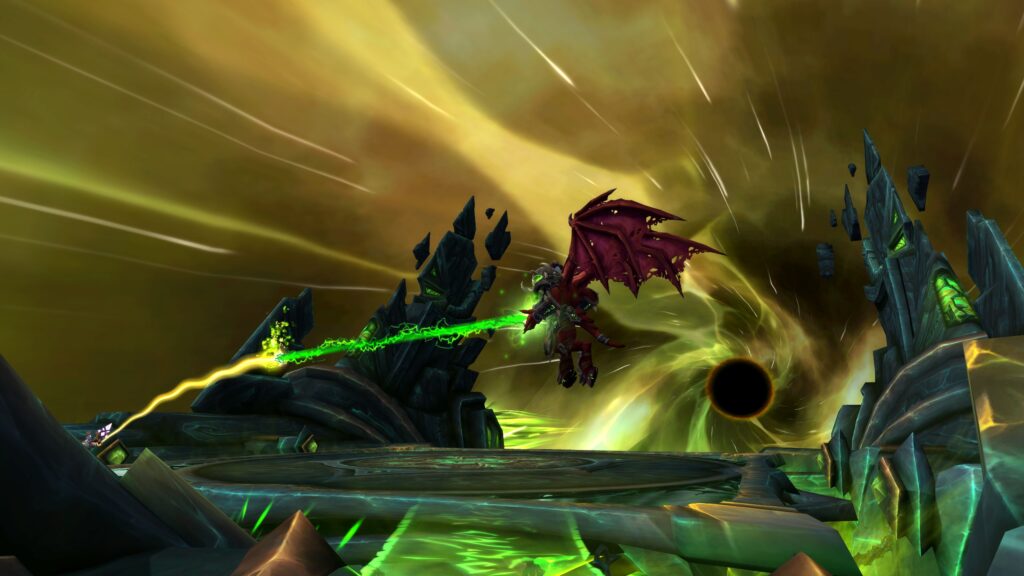
To conquer M’uru, player strategies had to be razor-sharp. The raid composition required a perfect balance of DPS and healing, with Priests playing a vital role in both phases. The importance of Discipline Priests couldn’t be overstated; their healing and shields often made the difference between victory and defeat.
Progression challenges were numerous, requiring guild dynamics to be as strong as the raid itself. Many guilds spent weeks, if not months, just learning the intricate dance of this fight.
- Key Mechanics: Switching between Light and Void phases, each with unique challenges.
- Vital Roles: Priests, especially for their shields and healing support.
- Guild Effort: Unparalleled team coordination and persistence.
M’uru’s lore implications added a layer of depth, tying the fight into the broader narrative of the Burning Crusade expansion.
Yogg-Saron’s Brain Room
M’uru’s intricate mechanics pushed raiders to their very limits, but in the sprawling halls of Ulduar, another malevolent force awaited. Enter Yogg-Saron’s Brain Room, a surreal and treacherous domain vital to overcoming the Old God. Here, the key lay in unraveling the brain room mechanics and employing precise yogg saron tactics.
As you enter the Brain Room, you’re transported to twisted visions that test both your concentration and your reaction times. Three distinct rooms—each one a distorted memory—challenge your grasp on reality. Your group must dismantle tangible pieces of Yogg-Saron’s psyche by defeating waves of mobs and inflicting damage on the brain itself. Time is precious; linger too long and you’ll suffer insanity’s grip.
Coordinating your team is essential. Divide into efficiently balanced groups to handle mobs swiftly, and assign players who excel in burst damage to the brain. Your tactics should prioritize mobility and focused aggression. The brain room mechanics don’t just demand raw power; they test your adaptability and decision-making under pressure.
As the team re-emerges into the main chamber, each player’s sanity hangs by a thread, setting the stage for the final confrontation.
The Lich King’s Fall
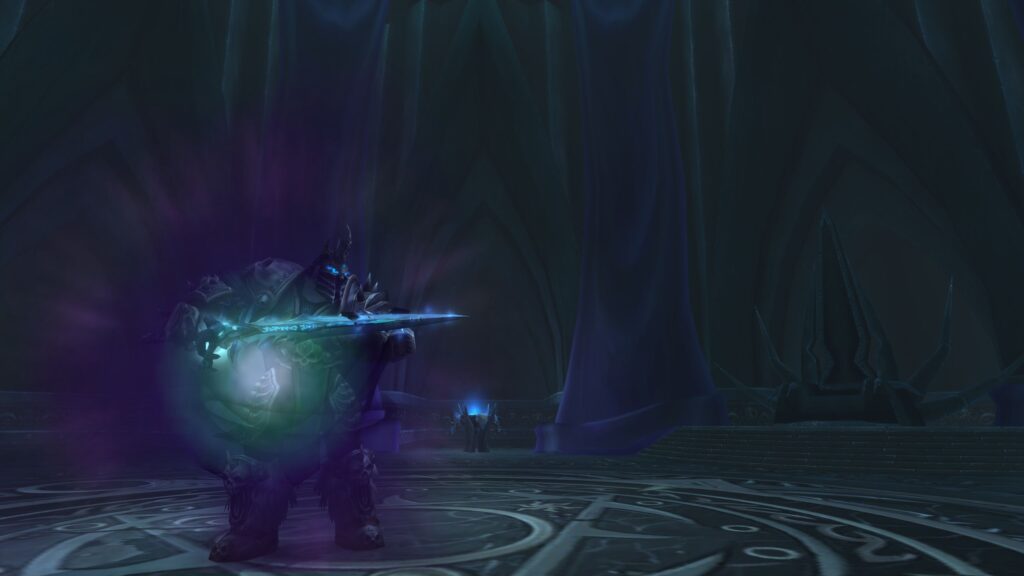
The Lich King’s fall is one of the most iconic moments in WoW raid history, blending intricate mechanics with a narrative crescendo that left players on the edge of their seats. Setting foot in Icecrown Citadel, it felt like everything had led to this ultimate showdown. Understanding Arthas’ journey, the artifact Frostmourne, and the significance of the Death Knight lore made every phase of the fight resonate deeply.
As you coordinated with your guild, defeating the Lich King’s tactics required precision and synergy. From dodging Defile to surviving the onslaught of Val’kyr, each mechanic was a test of skill and preparation. Sylvanas’ involvement and Arthas’ potential for redemption turned victory into a bittersweet moment, amplified by one of WoW’s most unforgettable cinematic moments.
Relive the excitement with:
- Raid Preparation: Hours spent optimizing gear, honing strategies, and practicing mechanics.
- Guild Camaraderie: The bond and shared triumph when you finally stood over the defeated king.
- Endgame Shift: How this battle marked a pivotal point in WoW’s evolving narrative, setting the stage for future lore developments.
The Lich King’s fall wasn’t just an end—it was a grand beginning for Azeroth’s next chapter.
Mythic Archimonde Kill
When players finally faced Mythic Archimonde in the Hellfire Citadel, it was more than just a challenging encounter; it was a test of every skill learned throughout Azeroth’s history. To succeed, your guild had to exhibit flawless guild coordination and master evolving strategies. Every aspect of raid composition mattered—selecting who could best handle encounter mechanics or contribute to overall team synergy.
Player communication became essential, with real-time calls dictating moves to counter mechanics like Shackled Torment and Allure of Flames. Time constraints weighed heavily, forcing your team to balance progression pacing with execution precision. Each phase introduced new challenges that required adapting strategies on the fly.
Winning wasn’t just about defeating Archimonde; it was also about equitable loot distribution. You navigated the triumph of victory and the politics of who got the coveted gear. Every decision, right down to allocating roles and spells, impacted success or failure. In the end, a successful kill relied on the perfect blend of all these elements, making Mythic Archimonde one of World of Warcraft’s most memorable and taxing raids. You faced it, and you conquered—defining raid history.
Frequently Asked Questions
What Were the Top Guilds Competing in Early Wow Raid Races?
You’ll find that in early WoW raid races, the top guilds included the likes of Nihilum, DnT, and Method. Their early competition was filled with legendary players, each team endeavoring for world-first completions. Fierce rivalries developed, with guilds pushing boundaries and innovating strategies. These races weren’t just about winning; they were epic battles of skill and dedication, capturing the imaginations of players worldwide.
How Did Blizzard Respond to Unexpected Raid Boss Bugs?
When push came to shove with unexpected raid boss bugs, Blizzard sprang into action. They knew player frustrations were mounting, so they rolled out emergency patches to implement swift bug fixes. Testing protocols improved over time, reducing such incidents. However, players’ engagement and feedback were essential; it helped Blizzard refine their approach, making future raids smoother. They always aimed to keep the gaming experience as seamless as possible.
What Strategy Changes Evolved in Raid Progress Over the Years?
You’ve seen raid mechanics grow complex, prompting strategy evolution. Early encounters were simpler, but player adaptability, driven by encounter design improvements, spurred optimization progress. Teams learned advanced coordination techniques, greatly improving performance. Over time, raids demanded precise execution and intricate planning. Strategies evolved from brute force to nuanced gameplay, emphasizing roles and communication. The constant challenge forced adaptability, creating a sophisticated raiding meta that transformed how players approach endgame content.
How Did Community Events Shape the Raiding Culture?
Community events created a culture of enchanting collaboration. You’ll find that community engagement boosted participation, forging friendships. Guild collaboration grew essential, blending varied strategies and skills. Raid diversity thrived with new approaches and fresh faces joining the fray. Player feedback became pivotal, tweaking tactics for triumph. These events fostered a fun, inclusive environment where everyone’s voice shaped the overall raid experience, pushing the boundaries of what’s achievable.
Which Raid Encounters Required the Most Hotfixes From Blizzard?
When talking about raid encounters that required the most hotfixes from Blizzard, N’Zoth, the Corruptor in Ny’alotha comes to mind. The hotfix frequency for this encounter was incredibly high, mainly due to the complex mechanics and player frustration with balancing issues. You’d often see players struggle, and Blizzard had to constantly tweak numbers and mechanics to guarantee a fair challenge without making the fight feel impossible.
Conclusion
As you journey through these moments, you feel the pulse of excitement, the weight of anticipation, and the sheer exhilaration that echoes through the halls of WoW raid history. Each raid is a tapestry of player triumphs, failures, and unforgettable drama. Whether it’s the shouts of victory over the Lich King’s defeat or the chaotic rush of Leeroy Jenkins’ charge, these moments craft a vivid tapestry that defines what makes World of Warcraft timelessly enthralling.
Like what you read? There’s more where that came from!